CHESS
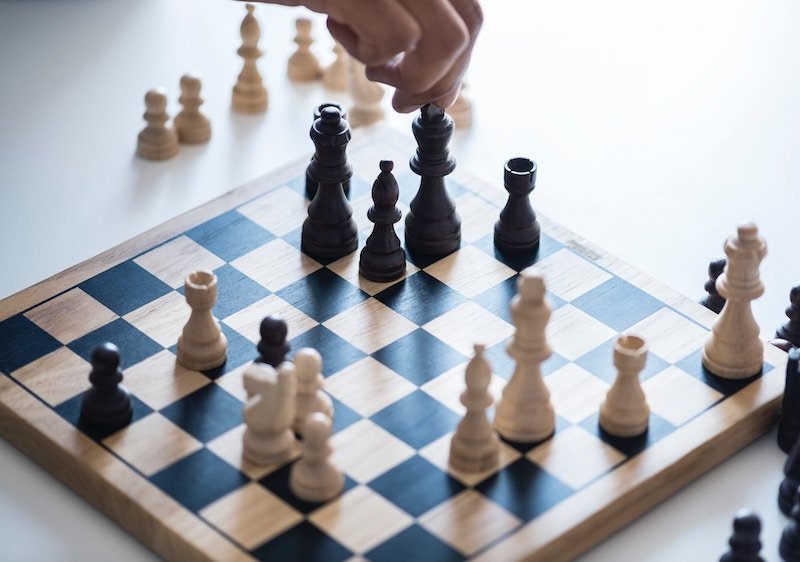
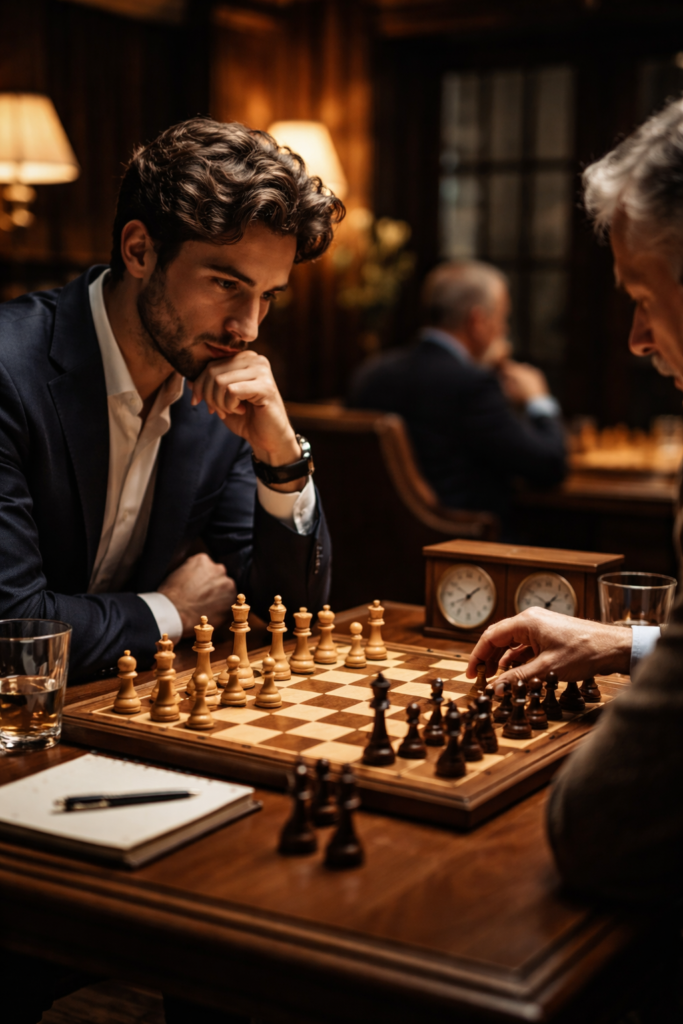
Chess is one of the oldest and most intelligent board games in the world, known for its deep strategy, concentration, and mental skill. It is a two-player game played on a square board consisting of 64 squares arranged in an 8×8 grid. The game is played between two opponents, one controlling the white pieces and the other controlling the black pieces. Each player begins with 16 pieces: one king, one queen, two rooks, two bishops, two knights, and eight pawns. The main objective of the game is to checkmate the opponent’s king, which means the king is under attack and has no legal move to escape.
History of Chess
he origin of chess dates back more than 1,500 years. It is believed to have originated in India during the Gupta Empire, where an early form of chess called “Chaturanga” was played. From India, the game spread to Persia and later to the Arab world and Europe. Over centuries, the rules evolved, and modern chess took shape around the 15th century in Europe. Today, chess is played worldwide and is recognized as a sport that enhances intelligence and critical thinking.
One of the major governing bodies of chess is FIDE, which organizes world championships and international tournaments. The game gained massive popularity due to legendary players like Garry Kasparov and Magnus Carlsen, who brought global attention to competitive chess.
Chess Board and Pieces
The chessboard has 64 squares with alternating light and dark colors. It is placed so that each player has a light-colored square at the bottom-right corner. Each piece in chess has its own unique movement and role in the game.
The king is the most important piece. It can move one square in any direction. If the king is trapped in a check position with no escape, the game ends in checkmate. The queen is the most powerful piece, capable of moving any number of squares horizontally, vertically, or diagonally. The rook moves in straight lines either horizontally or vertically, while the bishop moves diagonally across the board. The knight is a unique piece that moves in an L-shape and can jump over other pieces. Pawns move forward but capture diagonally and have the special ability to promote into any major piece when they reach the opponent’s end of the board.
Basic Rules of the Game
Chess begins with the player controlling the white pieces making the first move. Players then alternate turns, moving one piece at a time. Each move must follow the rules of the piece’s movement. A player can capture an opponent’s piece by moving onto the square occupied by that piece.
There are special rules in chess that make the game more strategic. Castling is a move that allows the king and rook to move simultaneously for protection. En passant is a special pawn capture rule, and pawn promotion occurs when a pawn reaches the final rank and is converted into a queen, rook, bishop, or knight.
The game can end in several ways, including checkmate, stalemate, resignation, or draw. A draw can occur due to insufficient material, repetition of moves, or mutual agreement between players.
The chessboard has 64 squares with alternating light and dark colors. It is placed so that each player has a light-colored square at the bottom-right corner. Each piece in chess has its own unique movement and role in the game.
The king is the most important piece. It can move one square in any direction. If the king is trapped in a check position with no escape, the game ends in checkmate. The queen is the most powerful piece, capable of moving any number of squares horizontally, vertically, or diagonally. The rook moves in straight lines either horizontally or vertically, while the bishop moves diagonally across the board. The knight is a unique piece that moves in an L-shape and can jump over other pieces. Pawns move forward but capture diagonally and have the special ability to promote into any major piece when they reach the opponent’s end of the board.
Basic Rules of the Game
Chess begins with the player controlling the white pieces making the first move. Players then alternate turns, moving one piece at a time. Each move must follow the rules of the piece’s movement. A player can capture an opponent’s piece by moving onto the square occupied by that piece.
There are special rules in chess that make the game more strategic. Castling is a move that allows the king and rook to move simultaneously for protection. En passant is a special pawn capture rule, and pawn promotion occurs when a pawn reaches the final rank and is converted into a queen, rook, bishop, or knight.
The game can end in several ways, including checkmate, stalemate, resignation, or draw. A draw can occur due to insufficient material, repetition of moves, or mutual agreement between players.
Importance of Strategy in Chess
Chess is not just a game of moves but a game of strategy and planning. Every move has a purpose, and players must think several steps ahead. The game is often divided into three phases: the opening, the middlegame, and the endgame.
In the opening, players focus on developing their pieces and controlling the center of the board. Popular openings like the Ruy Lopez and Sicilian Defense are studied by professional players. The middlegame is the most complex phase, where players create tactics, attacks, and defenses. The endgame occurs when few pieces remain on the board, and precise calculation becomes crucial.
Strategic thinking, patience, and foresight are essential qualities in chess. Players must analyze their opponent’s moves, anticipate threats, and create long-term plans to gain an advantage.
Benefits of Playing Chess
hess offers numerous mental and psychological benefits. It improves concentration, memory, and problem-solving skills. Regular chess practice enhances logical thinking and decision-making abilities. Students who play chess often perform better academically because the game trains the brain to think critically.
Chess also develops patience and discipline. Since every move matters, players learn to stay calm under pressure and make thoughtful decisions. Additionally, chess improves creativity as players explore different strategies and combinations.
Another important benefit of chess is that it is suitable for people of all ages. Children, adults, and even elderly individuals can enjoy the game and gain mental exercise. It is also used in schools worldwide as an educational tool to enhance cognitive development.
Chess in the Modern World
In today’s digital era, chess has become more popular than ever. Online platforms and mobile apps allow players to compete with opponents from different countries. Live streaming and online tournaments have made chess more accessible to millions of fans globally.
Major events like the World Chess Championship attract worldwide attention and showcase the highest level of strategic gameplay. These tournaments feature top grandmasters competing for the title of world champion.
With the rise of technology, artificial intelligence has also influenced chess. Advanced chess engines can analyze millions of positions and help players improve their skills. However, human creativity and intuition still play a crucial role in competitive chess.
Famous Chess Players
Throughout history, many great players have shaped the world of chess. Legends such as Bobby Fischer revolutionized modern chess with innovative strategies and deep preparation. Similarly, players like Magnus Carlsen and Garry Kasparov dominated the game with exceptional skill and consistency.
India has also produced remarkable chess talents, including Viswanathan Anand, who became a world champion and inspired a new generation of players. Today, young talents like Dommaraju Gukesh are continuing the legacy and achieving great success internationally.
Chess as a Sport and Career
Chess is recognized as a professional sport in many countries. Players can earn titles such as Grandmaster, International Master, and FIDE Master based on their performance and rating. Professional chess players participate in international tournaments, leagues, and championships.
Many players also become coaches, authors, and streamers, sharing their knowledge with aspiring learners. Sponsorships, prize money, and online content creation have made chess a viable career option for talented individuals.
Conclusion
Chess is more than just a board game; it is a powerful mental sport that combines intelligence, creativity, and strategic thinking. From its ancient origins in India to its global popularity today, chess has remained one of the most respected and intellectually stimulating games in the world. It teaches valuable life skills such as patience, planning, and resilience while providing endless enjoyment and challenge.
Whether played casually for fun or competitively at the highest level, chess continues to inspire millions of people worldwide. Its timeless nature, educational benefits, and strategic depth make it a game that will remain relevant for generations to come. Learning and playing chess not only sharpens the mind but also develops a disciplined approach to solving problems, making it one of the greatest games ever created.