
Gymnastics is one of the most exciting, disciplined, and artistic sports in the world. It is a sport that combines strength, flexibility, balance, coordination, and grace. From ancient times to modern Olympic competitions, gymnastics has evolved into a highly respected sport that inspires millions of athletes and fans across the globe. Whether performed on the floor, bars, beam, rings, or vault, gymnastics showcases the incredible capabilities of the human body and mind.
Origin and History of Gymnastics
The word “gymnastics” comes from the Greek word gymnos, which means “to exercise naked.” Gymnastics began in ancient Greece, where physical fitness was considered essential for a healthy life. Greek soldiers practiced exercises like jumping, tumbling, and balancing to stay strong and agile. Over time, these exercises developed into a structured sport.
Modern gymnastics started to take shape in the 18th and 19th centuries in Europe, especially in Germany and Sweden. Friedrich Ludwig Jahn, known as the “Father of Modern Gymnastics,” introduced gymnastic equipment like the horizontal bar and parallel bars. Gymnastics became an official Olympic sport in 1896 during the first modern Olympic Games held in Athens. Today, gymnastics is one of the most popular and watched Olympic sports, especially in events organized by the International Gymnastics Federation.
Types of Gymnastics
Gymnastics is not just one sport but a group of different disciplines. Each type requires different skills and techniques.
Artistic Gymnastics
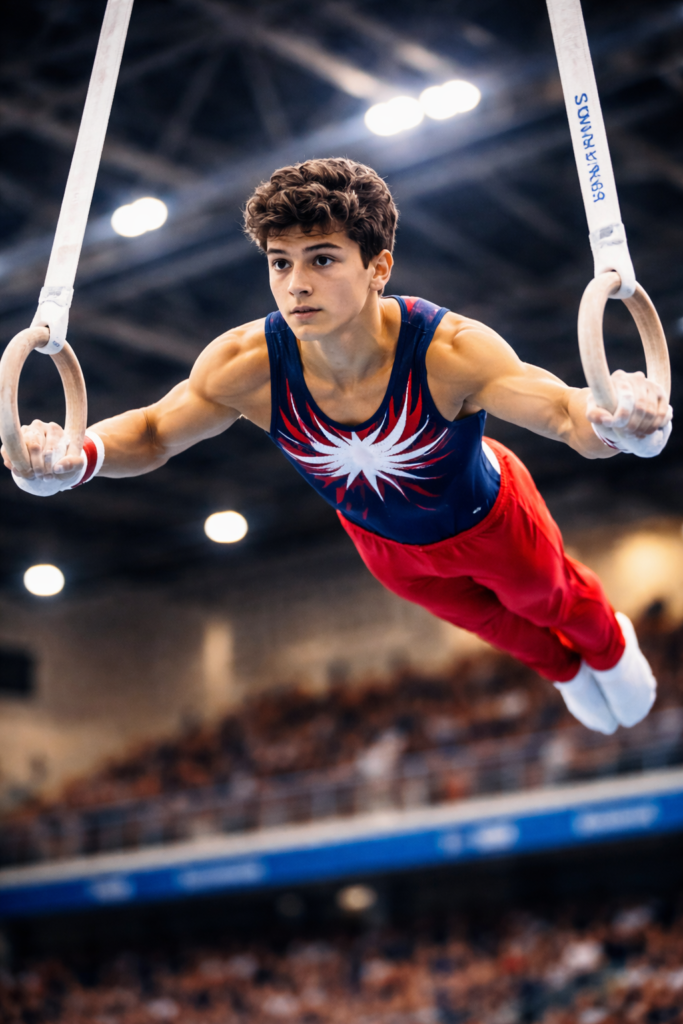
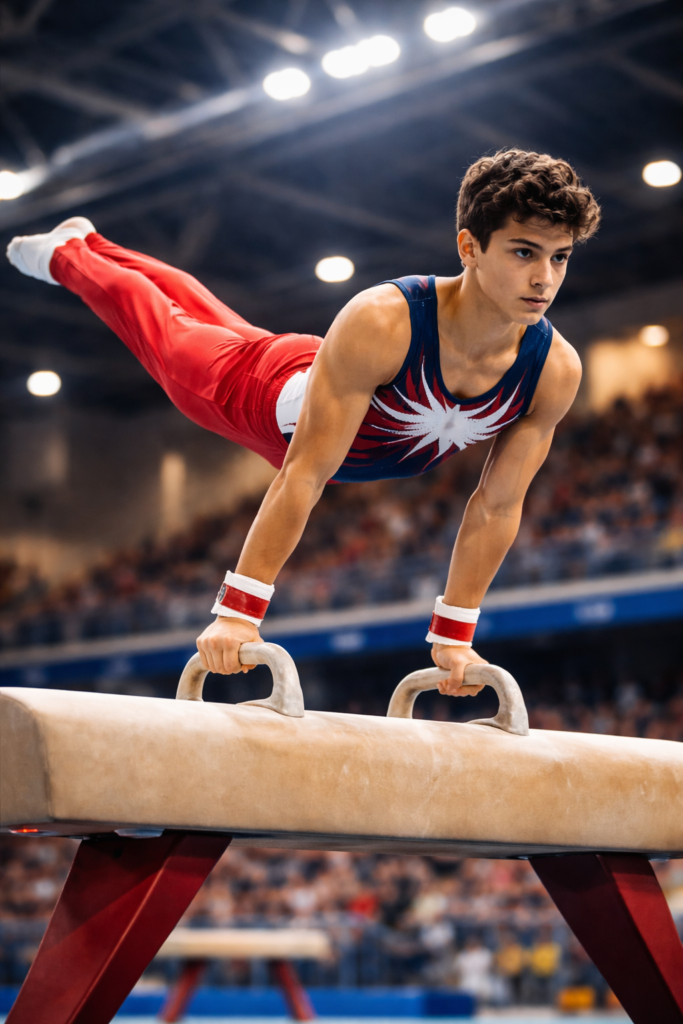
This is the most famous type of gymnastics and is seen in the Olympic Games. It includes events like floor exercise, vault, uneven bars, balance beam (for women), and rings, pommel horse, parallel bars, and horizontal bar (for men). Artistic gymnastics focuses on strength, flexibility, and artistic performance.Rhythmic Gymnastics
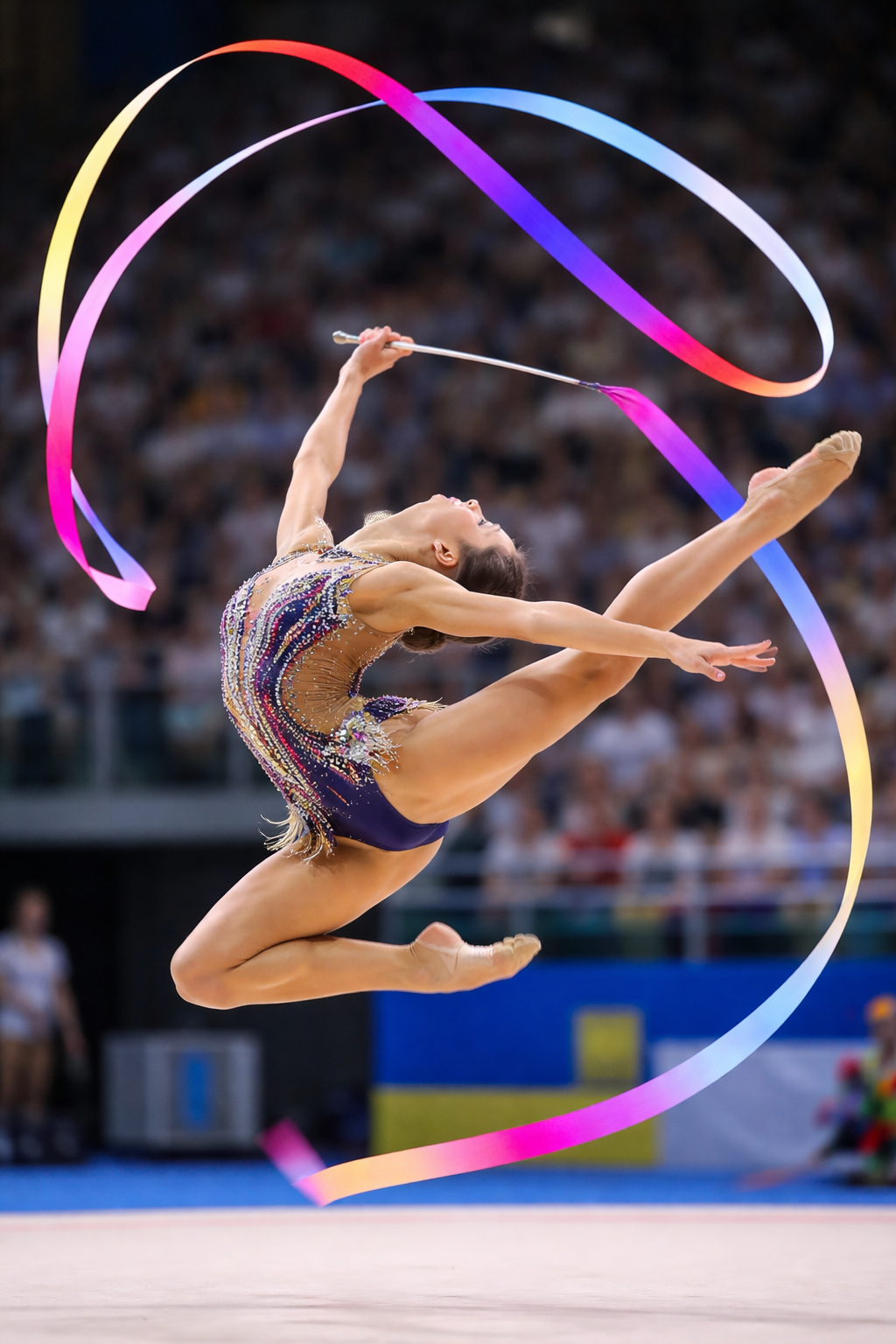
Rhythmic gymnastics combines dance, ballet, and gymnastics. Athletes perform routines using apparatus like ribbons, hoops, balls, clubs, and ropes. It requires elegance, flexibility, and rhythm with music.Trampoline Gymnastics
In this discipline, athletes perform high jumps and aerial flips on a trampoline. It demands excellent body control and aerial awareness.Aerobic Gymnastics
This type involves continuous movement, dance steps, and acrobatics performed with music. It focuses on endurance, strength, and rhythm.Acrobatic Gymnastics
This is a team-based gymnastics form where athletes perform lifts, throws, and balances together. It requires trust, coordination, and teamwork.
Gymnastics Equipment and Events
Gymnastics uses different equipment depending on the category and gender.
For Women:
Vault
Uneven Bars
Balance Beam
Floor Exercise
For Men:
Floor Exercise
Pommel Horse
Rings
Vault
Parallel Bars
Horizontal Bar
Each apparatus tests different physical abilities. For example, the balance beam tests balance and precision, while rings require extreme upper body strength.
Famous Gymnasts in the World
Many legendary gymnasts have made history with their extraordinary performances. One of the most famous gymnasts is Simone Biles, who is considered one of the greatest gymnasts of all time. She has won multiple Olympic gold medals and world championships due to her powerful and innovative routines.
Another iconic gymnast is Nadia Comăneci, who became the first gymnast to score a perfect 10 at the 1976 Olympics. Her performance changed the history of gymnastics forever.
From India, Dipa Karmakar gained global recognition for performing the difficult “Produnova Vault” at the 2016 Olympics and inspiring young athletes across the country.
Gymnastics in India
Gymnastics is gradually gaining popularity in India. Earlier, it was not a widely recognized sport, but now many young athletes are showing interest. Sports authorities and training academies are promoting gymnastics by providing better facilities and coaching.
The success of Indian gymnasts in international competitions has motivated many children to take up the sport. Schools and sports institutions are now encouraging gymnastics as part of physical education programs.
Challenges in Gymnastics
Despite being a beautiful sport, gymnastics is extremely challenging. It requires years of training, dedication, and physical endurance. Athletes often start training at a very young age. Injuries are also common due to the high-risk nature of flips and jumps.
Another challenge is the need for proper coaching and equipment. Without good training facilities, it becomes difficult for gymnasts to reach international levels. Mental pressure is also a major factor, especially during competitions.
Training and Practice in Gymnastics
Gymnastics training includes strength exercises, stretching, balance drills, and skill practice. A typical training session may last 3–6 hours daily for professional athletes. Coaches play a very important role in guiding gymnasts and improving their techniques.
Young beginners usually start with basic exercises like rolls, handstands, and cartwheels. As they grow, they learn advanced skills like flips, twists, and aerial routines. Proper diet and rest are also essential for maintaining fitness and preventing injuries.
Gymnastics in the Olympics
Gymnastics is one of the most important sports in the Olympic Games. It attracts huge global audiences due to its thrilling performances and artistic beauty. Countries like the USA, China, Russia, and Japan have strong gymnastics teams that dominate international competitions.
Olympic gymnastics includes artistic, rhythmic, and trampoline events. Winning an Olympic medal in gymnastics is considered a great honor because it requires years of hard work and dedication.
Conclusion
Gymnastics is a powerful combination of sport, art, and discipline. It teaches strength, flexibility, confidence, and determination. From ancient Greece to modern Olympic arenas, gymnastics has evolved into a globally celebrated sport. It not only entertains audiences with breathtaking performances but also inspires young athletes to stay fit and chase their dreams.
With growing awareness and better training facilities, gymnastics has a bright future worldwide, including in India. If practiced with proper guidance and dedication, gymnastics can transform both the body and mind. It is more than just a sport—it is a journey of passion, perseverance, and excellence that shapes strong and confident individuals for life.